
Asthma Review for the REx-PN®
Q: On auscultation, the nurse hears wheezing in a client with asthma. Considering the pathophysiology of asthma, what would the nurse identify as the primary cause of this lung sound?
A. Air entering the pleural space during inspiration
B. Dilation of the bronchioles and increased mucous
C. Movement of air through narrowed airways
D. Increased pulmonary compliance
That is a challenging question, don't you think? If you can't answer right away, there's no need to panic. To help you prepare for your REx-PN®, let's first discuss what asthma is.
What is Asthma?
Asthma is an intermittent, reversible obstructive airway problem. It is characterized by chronic inflammation of the airways and has exacerbation and remission periods. Before we jump into the pathophysiology of asthma, let's talk about how the lungs work, as they are the main organ involved with asthma.
How do the Lungs Work?
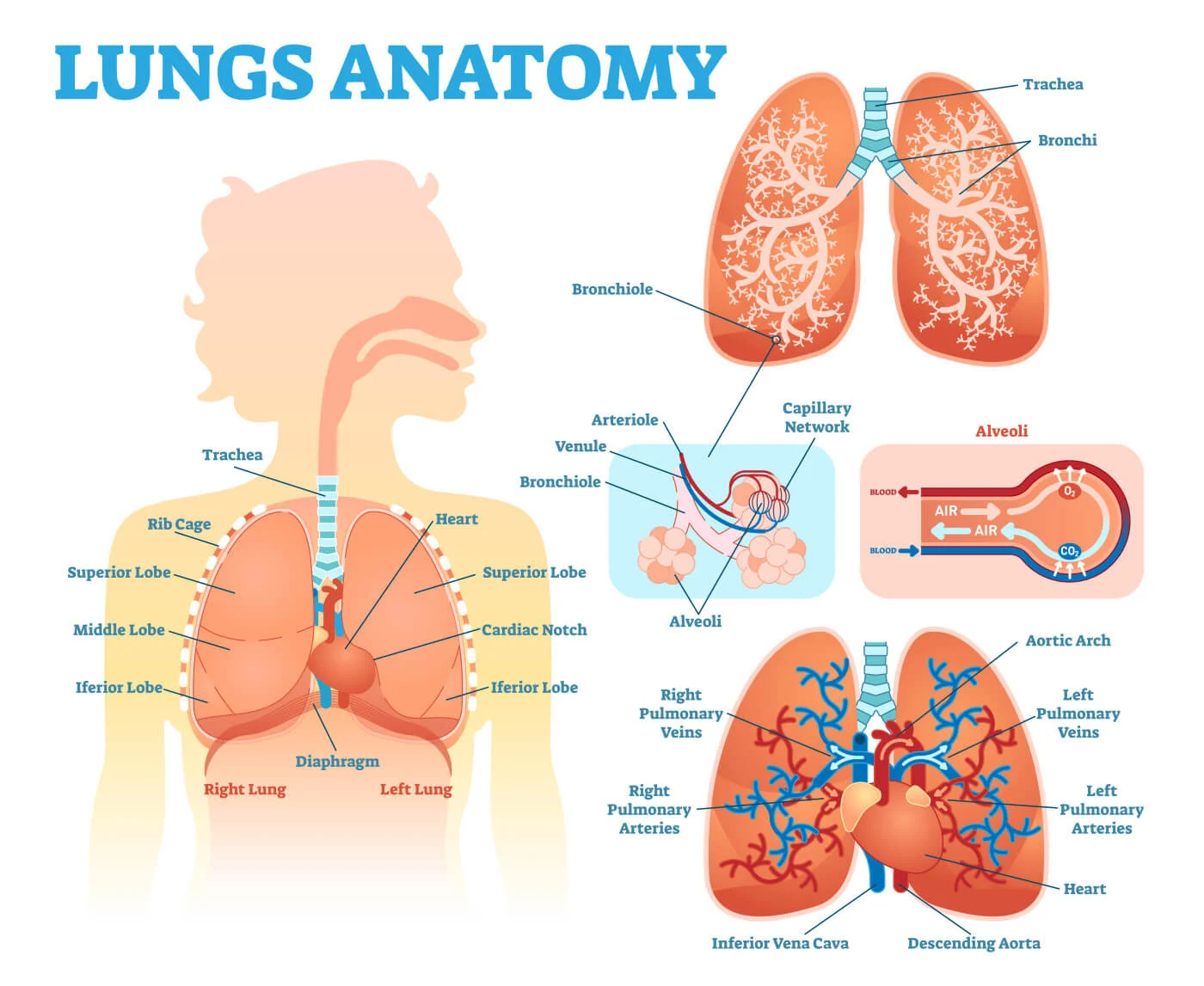
The respiratory system is the system that provides gas exchange in the body. It allows oxygen to be taken in (inspiration) and for carbon dioxide to be eliminated from the body (expiration). Air (oxygen) enters the nose or mouth and flows through the respiratory tract. It goes down the trachea and enters the lungs through air tubes or bronchi. The bronchi then further divide into smaller branches in the lungs called bronchioles, which end in tiny air sacs called alveoli. Within each lung, there are hundreds of millions of alveoli, and this is the site where oxygen exchange takes place.
For inspiration and expiration to occur, the lungs require the diaphragm muscles to move. Your diaphragm contracts when you breathe in, pulling the lungs down and allowing more air to enter as they expand, and then relaxes when you breathe out. But, when referring to muscles that aid in breathing, we need to consider the smooth muscles of the bronchi. The bronchi contain smooth muscles and elastin fibers, which change during contraction and relaxation during breathing. Without the use of these muscles, breathing would not occur properly.
Now that you know what asthma is and how the lungs work, let's learn more about how and why asthma happens.
Note: This content is from CleverOrcaPN.ca REx-PN® review. If you want to take it a step further and learn all of these concepts, click here.
Pathophysiology of Asthma
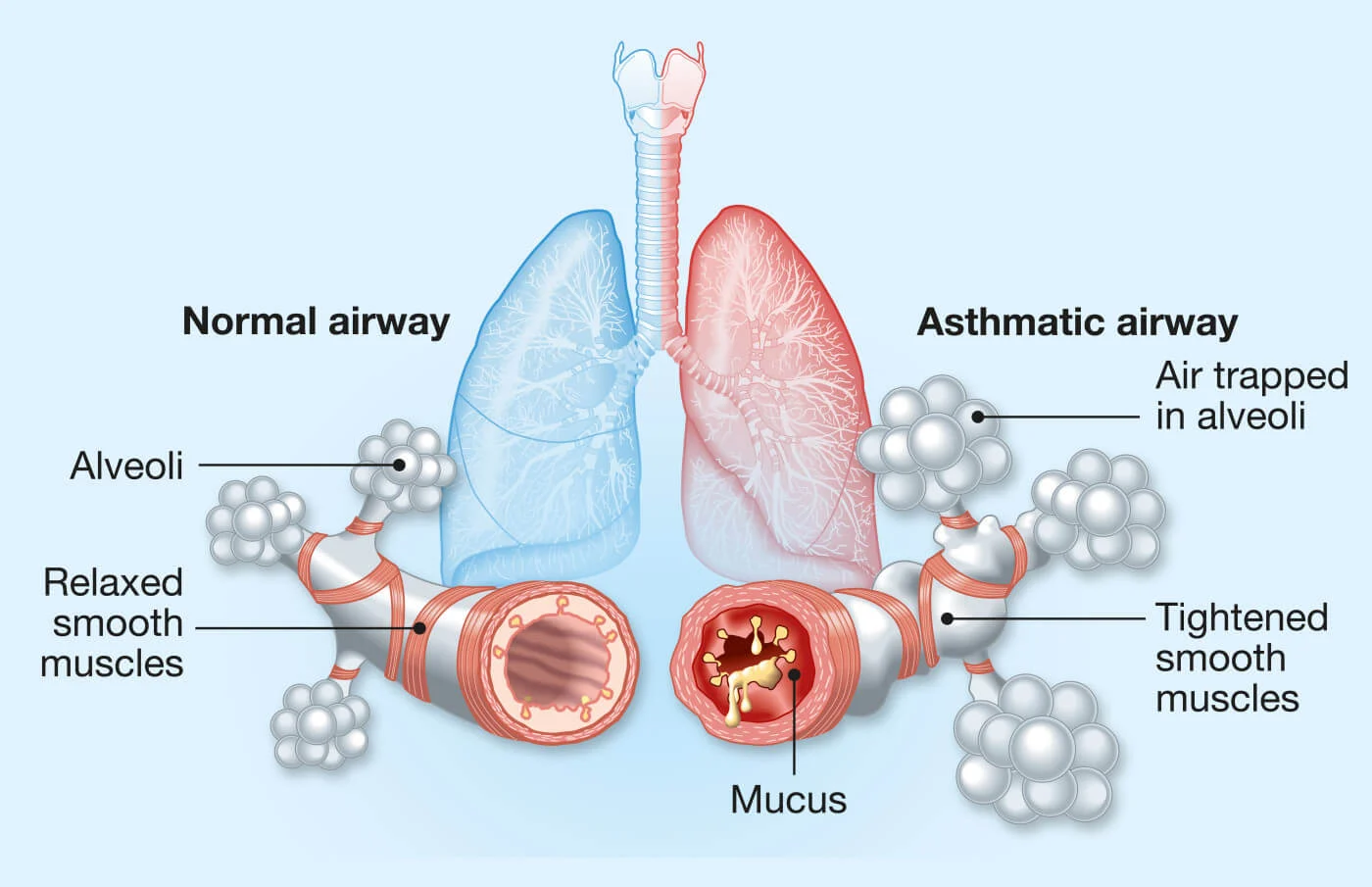
So then, how does asthma happen? Well, we now know that the lungs are surrounded by muscles and that the bronchi also contain muscles. In clients with asthma, the physiological mechanism of breathing changes due to inflammation, and these muscles cannot contract properly.
The main pathophysiological change that occurs with asthma is bronchiolar inflammation and airway constriction. When the bronchioles become inflamed, the airway constricts (narrows), leading to coughing, wheezing, and other asthma symptoms. This will also increase muscle spasms, mucous production, and muscle tightening, leading to wheezing, shortness of breath, cough, and chest tightness.
What Causes Asthma?
Asthma is a common childhood disorder. However, it may end up causing problems throughout adult life.
Risk factors include hypersensitivity to allergens and airway inflammation, exercise, air pollutants, and occupational factors.
Now that we have learned about the pathophysiology of asthma, are you ready to answer the REx-PN® practice question above?
Answer: C. Movement of air through narrowed airways
We know you want more practice questions like this. So, here you go. Get our free trial of the REx-PN® review course at CleverOrcaPN.ca.
Study Tips for Asthma
Remember, when the body's oxygen demand is greater than the oxygen supply = hypoxia.
Use the acronym RAT to remember early signs of hypoxia:
R-Restlessness, A-Anxiety, agitation, T-tachycardia, and tachypnea.
You are now one step closer to success! Keep going!
CleverOrcaPN Team
We are here for you
📧 Got questions? Reach out anytime: support@cleverorcapn.ca
🌟 97% Pass Rate: 🇨🇦 Built by Canadian faculty, made for REx-PN
🇨🇦 Canadian owned and operated
About Us
Become a Partner or Sponsor
REx-PN Exam Guide
Terms and Conditions