

Bed Sores Review for the REx-PN®
Q: A 72-year-old client has an open pressure ulcer injury over the coccyx that extends through the dermis and subcutaneous tissue. The wound edges are distinct, and the wound bed is pink-red in color. The nurse would correctly document this ulcer at which stage?
A. Stage I
B. Stage II
C. Stage III
D. Stage IV
Before we talk about the stages of bed sores, let’s first break down the concept into smaller details. This technique is helpful when reviewing for the REx-PN®.
What is a Bed Sore?
A pressure injury (also known as a pressure ulcer, decubitus ulcer, or bedsore) is a localized injury to the skin and/or underlying tissue. As a nurse, knowing the ulcer stage is extremely useful in knowing how to prevent and/or treat the injury and prevent further pain for your clients.
How do Bed Sores Occur?
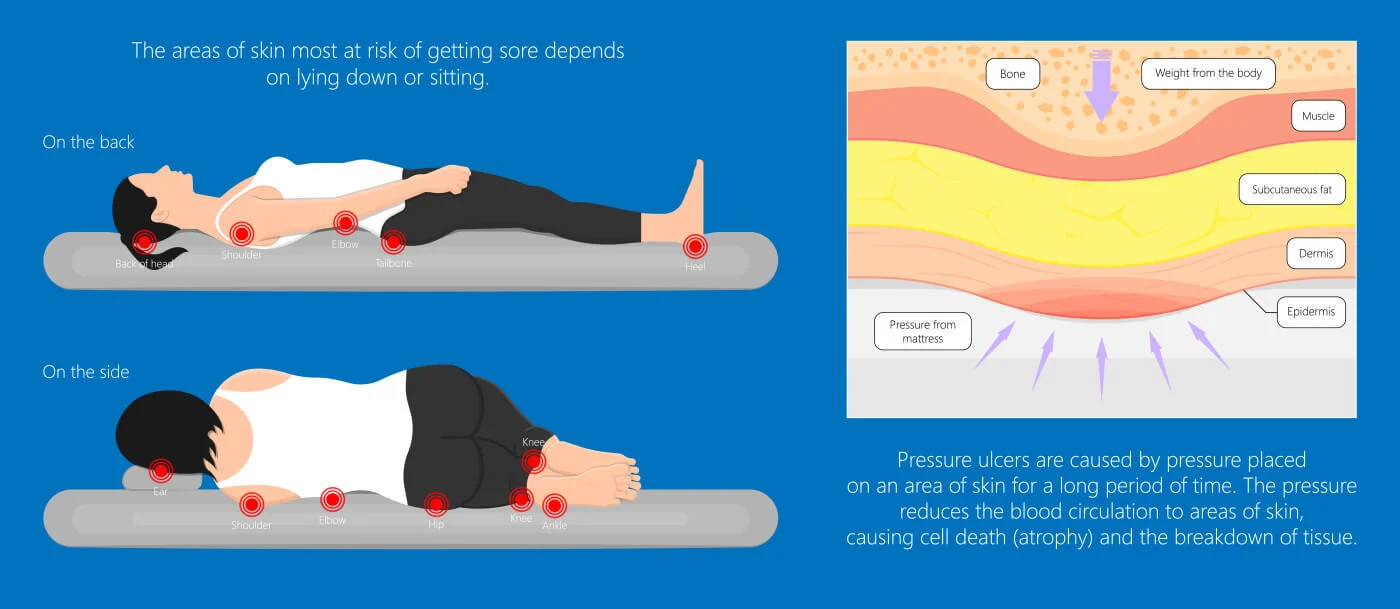
As discussed above, pressure sores are injuries to the skin and underlying tissues due to prolonged pressure on the skin. They can happen to hospitalized clients, especially those on bed rest or those hospitalized for a longer period. They also appear in non-hospitalized clients who put repeated pressure on their skin.
Pressure sores can develop over hours or even days. The ulcers generally occur over bony prominences of the body because of pressure with shearing forces or friction. Common sites of pressure ulcers are the tailbone, shoulder blades, spine, back of arms and legs, back of the head, hips, heels, and ankles. Some sores can heal with treatment, but some can become chronic and never heal completely.
Risk factors include age (70+), immobility/inactivity, contractures, inadequate nutrition, fecal and urinary incontinence, decreased sensation, pain or circulation, advancing age (loss of lean body mass, decreased skin elasticity), equipment (casts, restraints, traction), obesity, diabetes mellitus etc.
Those are interesting facts about bedsores! The next question is, how are bedsores staged and treated? Let’s get going!
Note: This content is from CleverOrcaPN.ca REx-PN® review. If you want to grab similar content, click here for the details.
What are the Symptoms of Pressure Sores?
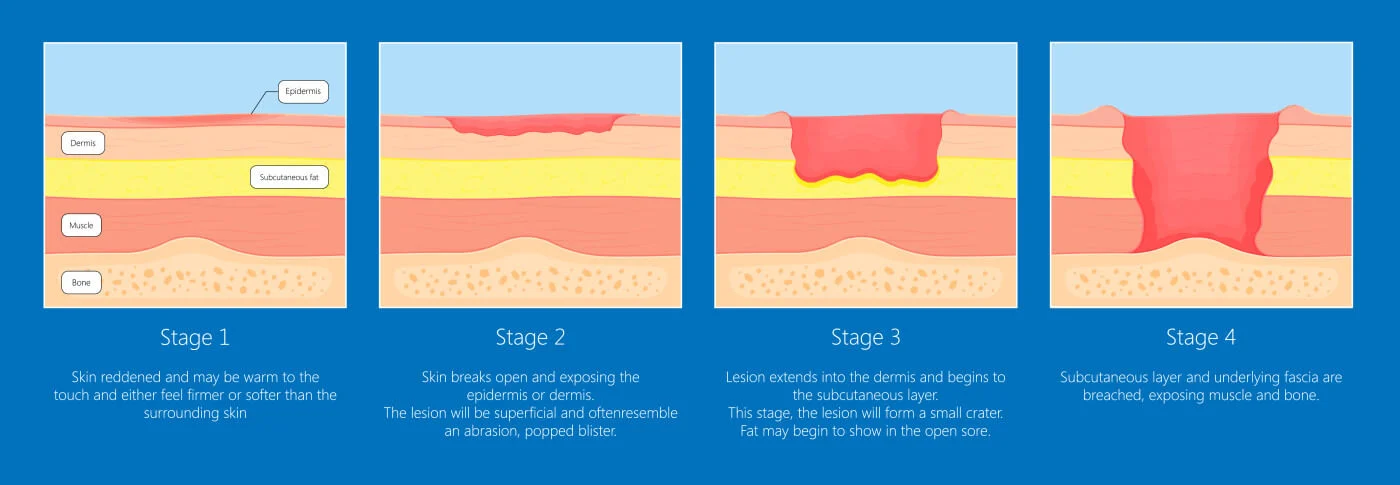
Bed sores appear as unusual skin color, swelling, inflammation, and pus around the sore, and tender areas. Bedsores are divided into stages based on their depth and severity:
- Stage I: Non-blanchable erythema of intact skin, intact skin with a localized area of non-blanchable erythema.
- Stage II: Partial-thickness skin loss with exposed dermis.
- Stage III: Full-thickness skin loss extending to the fascia, subcutaneous fat may be visible, but bone and tendon are not exposed.
- Stage IV: Full-thickness skin and tissue loss with muscle, tendon, ligament, and cartilage exposed.
- Unstageable: Obscured full-thickness skin and tissue loss. Due to the slough or eschar, the extent of pressure injury cannot be revealed. Visuals assist greatly in the full understanding of pressure ulcer injuries.
What is the Treatment for Pressure Sores?
A pressure injury can be prevented; therefore, it is necessary to identify those clients at increased risk for ulcer development and begin preventive care as soon as possible. If an individual starts to feel a pressure sore forming, it’s important to reposition them to relieve the pressure on that particular area.
Treatment, however, depends on how severe the pressure ulcers are. Medication may be required if the pressure sore becomes infected (antibiotics) or if they become painful (NSAIDs, opioids). Certain dressings can help speed up the healing process, and occasionally debridement may be required to help clean the wound to help prevent further spread of infection. In extreme cases, surgery may be required to remove the damaged tissues from the wound.
Now that we have comprehensively reviewed pressure sores, you’re ready to answer any pressure sore-related question on the REx-PN®. What’s your answer to the question above?
Answer: C. Stage III
If a pressure sore extends through the dermis and subcutaneous tissue, with distinct wound edges, and the wound bed is pink-red in color, the pressure sore is at Stage III.
We know you want more practice questions like this. So, here you go. Get our free trial of the REx-PN® review course at CleverOrcaPN.ca.
Study Tips for Bed Sores
RBSM – Real Bed Sore Memory.
Real – Red: Stage 1, color changes to red.
Bed – Breaks: Stage 2, skin breaks.
Sore – Subcutaneous: Stage 3, sore goes through the subcutaneous layer.
Memory – Muscles: Stage 4, sores extend to the muscles.
That was one step closer to success! Way to go!
CleverOrcaPN Team
We are here for you
📧 Got questions? Reach out anytime: support@cleverorcapn.ca
🌟 97% Pass Rate: 🇨🇦 Built by Canadian faculty, made for REx-PN
🇨🇦 Canadian owned and operated
About Us
Become a Partner or Sponsor
REx-PN Exam Guide
Terms and Conditions