Gallbladder Review for the REx-PN®
Q. A client was admitted to the hospital with cholelithiasis (gallbladder stones). Which of the following clinical manifestations indicate that the client is experiencing biliary obstruction?
A. Pale yellow urine
B. Clay-colored stools
C. Left lower quadrant pain
D. Asterixis
Before answering that question, let's briefly discuss important facts about the gallbladder to help prepare you for your REx-PN®.
What is the Gallbladder
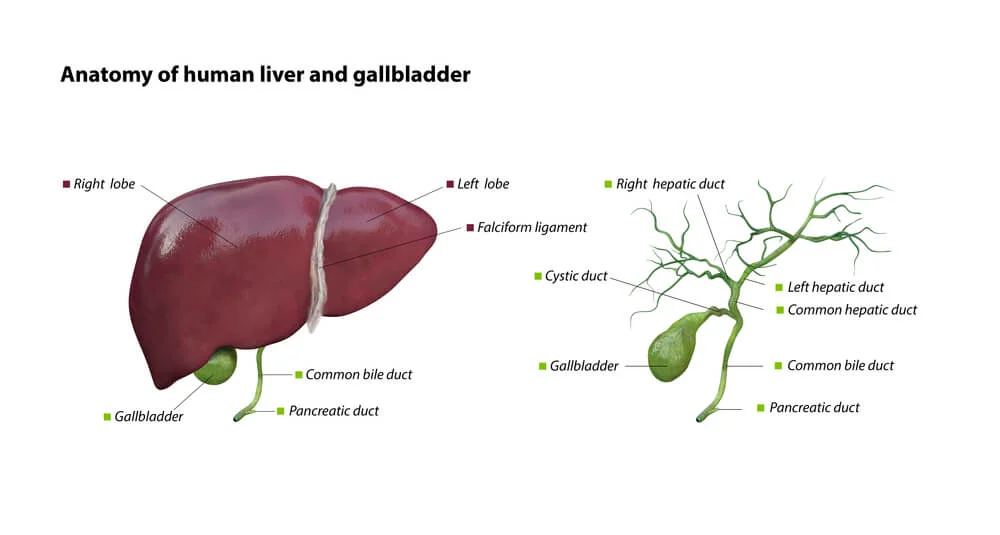
The gallbladder is a small, pear-shaped organ tucked below the liver. You won't know it's there until it starts hurting! It is located on the upper right side of the stomach. And anyone with cholelithiasis (we will get to that in this REx-PN® Review) will feel that pain in the stomach, which can also radiate through the back and chest.
The gallbladder is responsible for storing a really important green fluid. Can you guess which one it is? If you guess bile, you are correct! The bile helps digest fats and vitamins.
Let's follow the bile flow: the green fluid flows from the liver via the hepatic duct into the common bile ducts. The common bile duct enters the duodenum (part of the intestine) in conjunction with the pancreatic duct. When food enters the duodenum, the gallbladder contracts excreting bile into the intestine via the common bile duct. Oh, and you produce 600-1200 mL of bile daily.
Note: This content is from CleverOrcaPN.ca REx-PN® review. If you want to grab similar content, click here for the details.
Now that you have a general idea about the gallbladder and the green bile, its time to learn about gallbladder problems!
Cholelithiasis (Gallstones)
Cholelithiasis happens when bile clumps together into hard masses. Gallstones can be tiny specks or the size of a golf ball. These stones can block bile from flowing out if they get big enough. That can lead to a gallstone attack, a sudden pain in the stomach. The gallstones can also form in the cystic, hepatic, or common bile duct.
Biliary Obstruction
Obstruction of any of these bile ducts is referred to as a biliary obstruction. And because of the blockage, the bile does not reach its destination (the duodenum) to aid in the digestion of fats.
Gallstones are not the only cause of biliary obstruction. The other factors include inflammation of the bile duct, narrowing of the bile duct, cysts, enlarged lymph nodes, etc.
Let's continue our REx-PN® review; we are almost getting to the answer!
Manifestations of Obstruction
There are key manifestations when biliary obstruction occurs, which do not occur with cholelithiasis alone. Please note the following hallmark signs of biliary obstruction.
- Jaundice (yellow discoloration of the skin and sclera) due to bilirubin deposits in the skin and body tissue.
- Dark urine due to the increased excretion of bilirubin.
- Pruritus (itch) due to the accumulation of bile salts beneath the skin.
- Clay-colored stools due to the bile not reaching the intestine (which normally darkens the stool).
With our short review of the gallbladder and associated problems, take a shot at answering the REx-PN® practice question above.
Answer: B. Clay-colored stools
We know you want more practice questions like this. So, here you go. Get our free trial of the REx-PN® review course at CleverOrcaPN.ca.
We wish you the best! If you see a question related to the gallbladder, you are ready to ace it. And that's a wrap for this REx-PN® practice question review. See you soon!
Stay focused!
CleverOrcaPN Team
We are here for you
📧 Got questions? Reach out anytime: support@cleverorcapn.ca
🌟 97% Pass Rate: 🇨🇦 Built by Canadian faculty, made for REx-PN
🇨🇦 Canadian owned and operated
About Us
Become a Partner or Sponsor
REx-PN Exam Guide
Terms and Conditions