

Hip Fractures Review
for the REx-PN®
Q: The key clinical manifestations of a fractured hip include which of the following?
A. Internal rotation of the affected extremity
B. The affected extremity is longer than the unaffected extremity
C. External rotation of the affected extremity
D. The unaffected extremity maintains abduction
Before answering the question, let’s discuss hip fractures in more detail. This review will prepare you for your REx-PN®.
What is a Fracture?
When you break a bone, it is medically called a bone fracture. Basically, a fracture is a disruption or break in the continuity of the bone. There are many types of fractures depending on how a bone breaks. Fractures are described by how they affect the body: either as an open fracture or a closed fracture. An open fracture (or compound fracture) occurs when the broken ends of a bone create an open wound on the skin. A closed fracture occurs when the injury does not break the skin.
Fractures are classified according to severity: complete, displaced, partial, or stress fractures.
- Complete fracture: the break goes completely through the bone, separating it in two pieces.
- Displaced fracture: the gap caused by the break is displaced, making the bone come out of alignment. This fracture generally requires surgical repair.
- Partial fracture: the break does not go all the way through the bone, so it is an incomplete break.
- Stress fracture: the bone has a small crack within it.
What is a Hip Fracture?
A hip fracture involves the proximal third of the femur and extends 5 cm below the lesser trochanter. Two types of fractures, Intracapsular (femoral neck) associated with osteoporosis and extracapsular (outside joint capsule), usually caused by severe trauma or a fall.
The classic signs of hip fracture include severe pain, tenderness, and muscle spasms to the affected extremity, the affected extremity is in adduction and is externally rotated, and the affected extremity is shorter in length than the unaffected extremity. There may be a deformity noted in the affected hip.
Hip fractures may be repaired by prostheses, nail plates, or hip joint replacement.
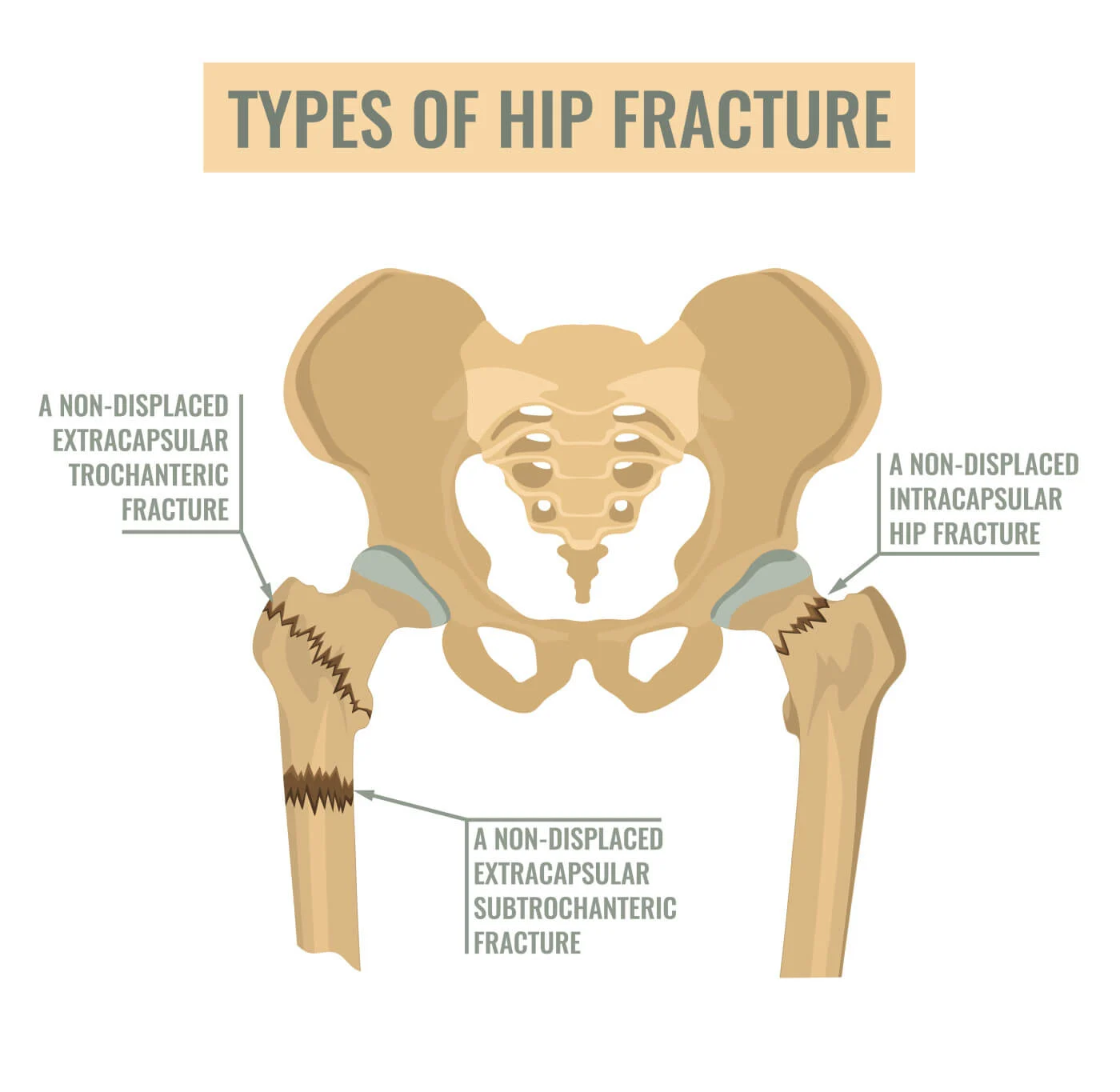
Now that we know what hip fractures are, let’s dig deeper into the concept!
Note: This content is from CleverOrcaPN.ca REx-PN® review. If you want to grab similar content, click here for the details.
Who is Affected by Hip Fractures?
Fractured hips are common in older adult clients, often resulting from a fall. Incidence is increased in women over 65 years of age due to the loss of bone mass related to lower estrogen levels during menopause and the risk of osteoporosis.
Nursing Techniques for Hip Fractures
A priority nursing consideration is the development of complications after a hip fracture, such as thromboembolism and compartment syndrome. Therefore, frequent assessment using the “6 P’s” is essential for early identification. Circulatory and neurologic checks are performed every 2-4 hours or as necessary.
“THE 6 P’s” of the Affected Extremity:
Pallor, skin color.
Polar, skin temperature.
Pulselessness, lack of a pulse.
Pain.
Paresthesia, presence of numbness and tingling.
Paralysis, inability to move or wiggle toes.
That’s a wrap for our review of hip fractures. Now it’s time to practice your critical thinking skills by answering the REx-PN® practice question above!
Answer: C. External rotation of the affected extremity
We know you want more practice questions like this. So, here you go. Get our free trial of the REx-PN® review course at CleverOrcaPN.ca.
Stay positive, work hard, and make it happen!
CleverOrcaPN Team
We are here for you
📧 Got questions? Reach out anytime: support@cleverorcapn.ca
🌟 97% Pass Rate: 🇨🇦 Built by Canadian faculty, made for REx-PN
🇨🇦 Canadian owned and operated
About Us
Become a Partner or Sponsor
REx-PN Exam Guide
Terms and Conditions