
Melanoma Review for the REx-PN®
Q: Using the ABCDEs of skin cancer, which characteristic refers to a mole changing forms into malignant melanoma?
A. Evolving
B. Asymmetry
C. Border
D. Diameter
Before we hop right into answering that REx-PN® practice question, how about learning about skin cancer first?
What is Skin Cancer?
Skin cancer is just as it sounds; it's cancer of the skin. As cells in the skin are exposed to harmful sun rays, abnormal skin cells will begin to grow, causing skin cancer. It is a fairly common cancer, affecting 1 in 5 Americans by age 70. There are three major types of skin cancer: basal cell carcinoma, squamous cell carcinoma, and melanoma. If caught early, skin cancer is highly treatable, with a 99% survival rate with early detection.
What are the Different Types of Skin Cancer?
Skin cancer is divided into non-melanoma cancers (squamous cell carcinomas and basal cell carcinomas) and melanoma cancer. Non-melanoma cancers are generally caused due to sun exposure and appear in areas with heavy sun exposure (such as the scalp, face, lips, ears, neck, arms, hands, etc.). Melanoma cancers can appear anywhere in the body.
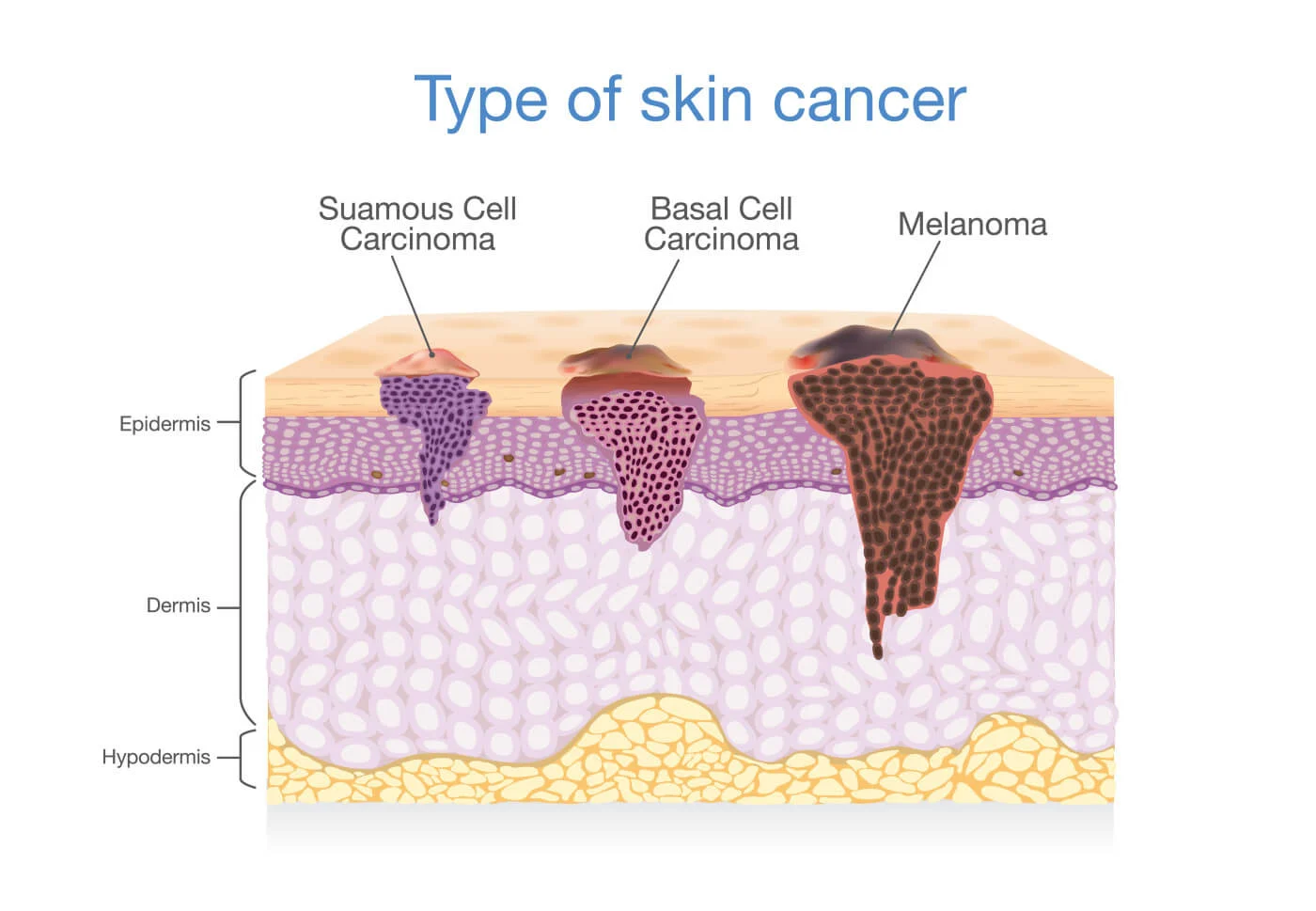
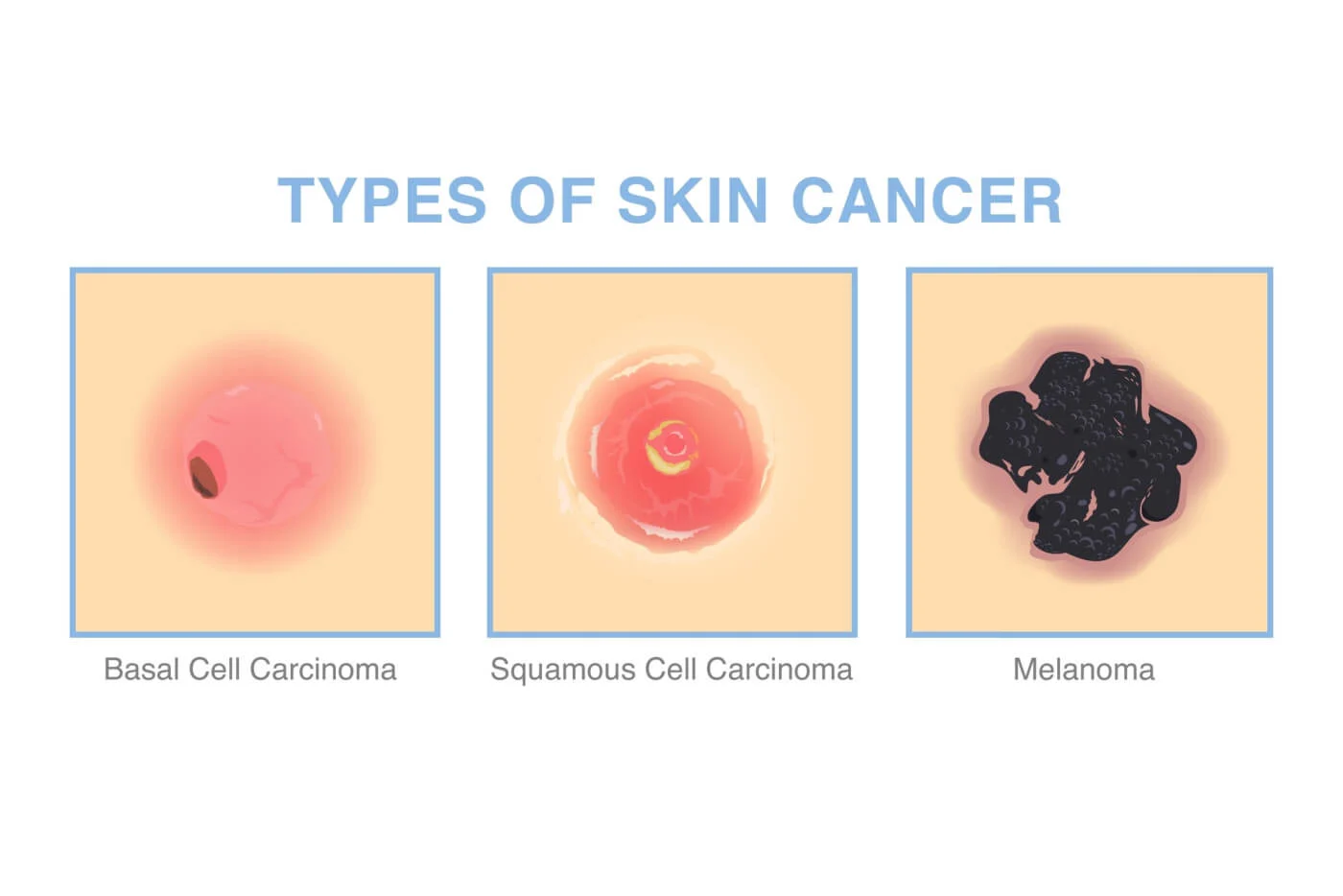
Basal cell carcinoma (BCC) is the most common type of skin cancer. It usually affects individuals with fair colouring (skin, eyes, hair) and is caused by frequent sun exposure. The cancer cells appear flesh-coloured, with pearl-like bumps; sometimes, it's referred to as a "waxy bump." This type of cancer is highly treatable if caught early.
Squamous cell carcinoma (SCC) is the second most common type of skin cancer. It also affects individuals with fair skin but can develop in darker individuals. It is generally caused by sun exposure but can also appear in people with precancerous skin growths called actinic keratoses. It appears as a firm red nodule or flat scaly area on the skin's surface. SCC is mainly in the epidermis but can spread if not caught and treated early.
Melanoma is the most serious form of skin cancer as it can spread easily due to where it develops (in the melanocytes of the skin). It is characterized by a sudden or progressive change in a mole's size, symmetry, colour, elevation or shape. It can develop in a mole already on your body or may grow in the form of a dark spot unrelated to a preexisting mole. This cancer can affect any individual with any colouring. Malignant melanoma has the highest mortality of any form of skin cancer. Common sites include the back and legs in women, trunk, head, and neck in men.
So melanoma is indeed something to watch out for, both in the real nursing world and in the REx-PN®. It will definitely help to discuss it in more detail!
Note: This content is from CleverOrcaPN.ca REx-PN® review. If you want to grab similar content, click here.
What is Malignant Melanoma?
Malignant melanoma is a type of skin cancer that is cancerous (malignant = cancerous). Melanocytes in a mole undergo cellular changes, which form cancer cells that spread to any organ, including the brain and the heart. It is crucial to diagnose melanoma early before it metastasizes to the rest of your body. This can be done by using the ABCDEs of skin cancer.
The ABCDEs of Skin Cancer
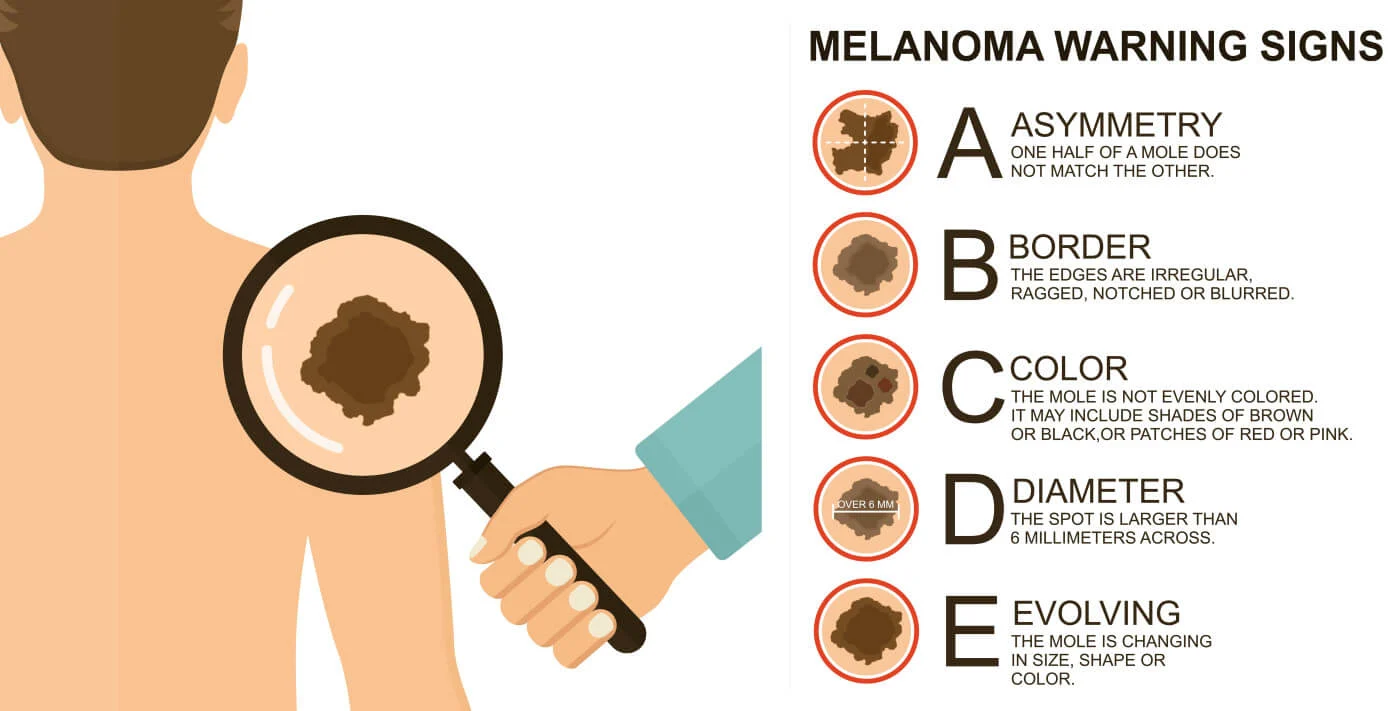
If you want to check if a mole is cancerous, you can use the ABCDEs to help see warning signs of malignant melanoma.
A: Asymmetry.
Does one half of the mole match the other half of the mole?
B: Border.
Are the edges (borders) irregular, ragged, notched, or burred?
C: Colour.
Is the mole evenly coloured? It may include shades of brown or black, pink, red, white or blue.
D: Diameter.
Is the mole large? Most melanomas are generally at least 6mm in size.
E: Evolving.
Is the mole changing size, shape and colour? Does it look different from before?
Now that we have reviewed the basics of skin cancer and how to use the ABCDEs for assessment, we can refer to the REx-PN® practice question above and try answering it!
Answer: A. Evolving
There’s more of this type of question in our test bank. Move forward in your REx-PN® journey by trying our mock exams. Check them out here: REx-PN® Mock Exam
What a productive day! Keep going!
CleverOrcaPN Team
We are here for you
📧 Got questions? Reach out anytime: support@cleverorcapn.ca
🌟 97% Pass Rate: 🇨🇦 Built by Canadian faculty, made for REx-PN
🇨🇦 Canadian owned and operated
About Us
Become a Partner or Sponsor
REx-PN Exam Guide
Terms and Conditions