

Pleural Effusion Review for
the REx-PN®
Q: A client admitted with a pleural effusion will have which of the following clinical manifestations present?
A. Increased breath sounds to the affected lung
B. Anginal chest pain, which may radiate to the jaw
C. Inspiratory stridor with substernal retractions
D. Diminished breath sounds and pleuritic pain
Which do you think is the correct answer to this question? If you’re not sure, don’t panic! We got you! Pleural effusion is fancy terminology for water in the lungs. This is essential to know if you’re taking the REx-PN®. Let’s learn more about it!
What is Pleural Effusion?
Pleural effusion is caused by a collection of fluid in the pleural space. A small amount of fluid always fills this space as it helps lubricate the lungs as they expand, but when too much fluid builds up, it is called pleural effusion. It is often not a disease itself but a symptom associated with other disease processes. If the fluid build-up is rapid or the client develops a “large” effusion, the lung will collapse (atelectasis), and a chest tube placement will be required to re-expand the lung and facilitate breathing.
There are many causes of pleural effusion, with congestive heart failure being the main cause. Other causes include pneumonia, liver disease, malignancy (cancer), certain autoimmune diseases (lupus), and TB. If the pleural fluid becomes purulent, the condition is called empyema. If the pleural cavity is filled with air or blood, these conditions are referred to as pneumothorax (air) and hemothorax (blood).
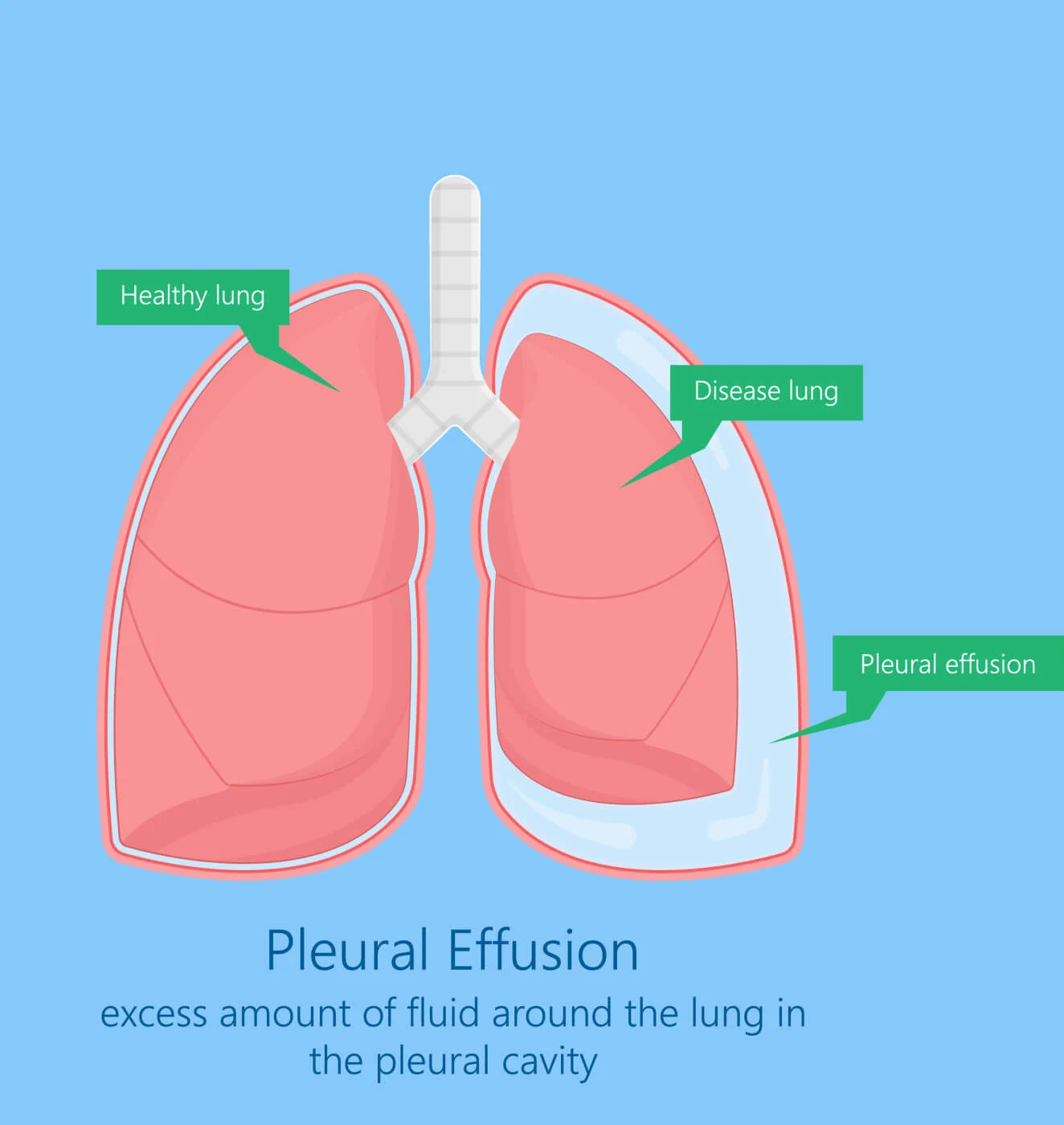
Now that you know about pleural effusion and its causes, you should also learn how to check for signs and symptoms in affected clients.
Note: This content is from CleverOrcaPN.ca REx-PN® review. If you want to take it a step further and learn all of these concepts, click here.
What are the Clinical Manifestations of Pleural Effusion?
Clinical manifestations include shortness of breath and dyspnea due to the build-up of large quantities of fluid in the pleural cavity, decreased breath sounds, asymmetric chest expansion, and pleuritic pain on inspiration.
Thoracentesis can be performed to remove fluid or air around the lungs. Pleurodesis, which is inflammation caused by instilling a sclerosing agent into the pleural cavity to promote the pleura to stick to the chest wall, may be performed to prevent reoccurrences. For both procedures, a needle is inserted through the chest wall into the pleural space to remove the excess fluid.
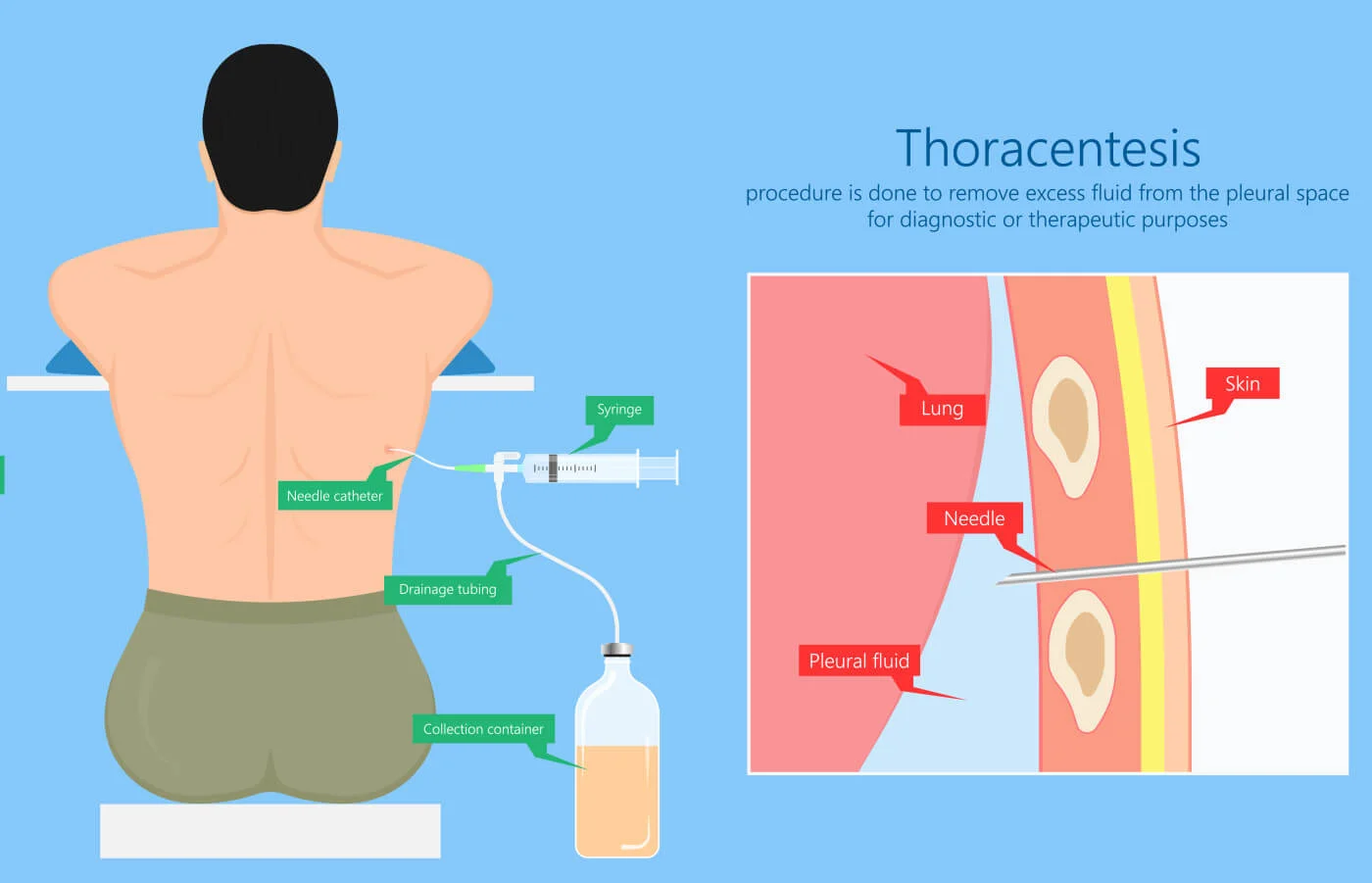
Understanding the differences and pathophysiology between the various disorders involving the pleural cavity is essential. Now that we have reviewed pleural effusion, are you confident answering the REx-PN® practice question above?
Answer: D. Diminished breath sounds and pleuritic pain
If a pressure sore extends through the dermis and subcutaneous tissue, with distinct wound edges, and the wound bed is pink-red in color, the pressure sore is at Stage III.
Looking for an awesome review package to pass the REx-PN®? Check this out! >
Your efforts are about to pay off! Keep going!
CleverOrcaPN Team
We are here for you
📧 Got questions? Reach out anytime: support@cleverorcapn.ca
🌟 97% Pass Rate: 🇨🇦 Built by Canadian faculty, made for REx-PN
🇨🇦 Canadian owned and operated
About Us
Become a Partner or Sponsor
REx-PN Exam Guide
Terms and Conditions